The efficiency of industrial air filtration depends heavily on the precision of the media used to capture airborne contaminants. In high-demand environments, the search for a reliable 100 micron stainless steel filter often leads engineers to evaluate a variety of materials, including advanced cellulose composites, to ensure the longevity of expensive machinery.
Global industrial standards emphasize the need for filtration systems that can handle high flow rates while maintaining strict efficiency ratings. While a 100 micron stainless steel filter provides specific mechanical strengths, many modern applications utilize high-efficiency wood pulp fiber materials to achieve filtration efficiencies as high as 99.99% for particles as small as 2 microns.
Understanding the balance between material durability and filtration precision is key to optimizing gas turbines, compressors, and centralized air-conditioning systems. By integrating high-quality 100 micron stainless steel filter concepts with cellulose air filter cartridges, industries can significantly reduce downtime and prevent the intake of destructive floating dust.
Industrial Importance of 100 micron stainless steel filter Standards
In the realm of environmental control equipment, the implementation of a 100 micron stainless steel filter serves as a benchmark for coarse filtration and pre-filtration stages. These standards are critical for protecting downstream components from large debris and ensuring that high-efficiency cartridges are not prematurely clogged.
The global movement toward ISO-certified air quality management has pushed manufacturers to refine their filtration media. By adhering to the structural integrity of a 100 micron stainless steel filter, industries can establish a primary line of defense that is both washable and durable.
Material Composition and Filtration Mechanics
The mechanics of air purification involve a complex interaction between the filter media and the contaminant particles. While a 100 micron stainless steel filter relies on a precise mesh weave to block particles, cellulose air filter cartridges utilize high-quality wood pulp fiber materials from the United States and Western Europe for deeper penetration and higher efficiency.
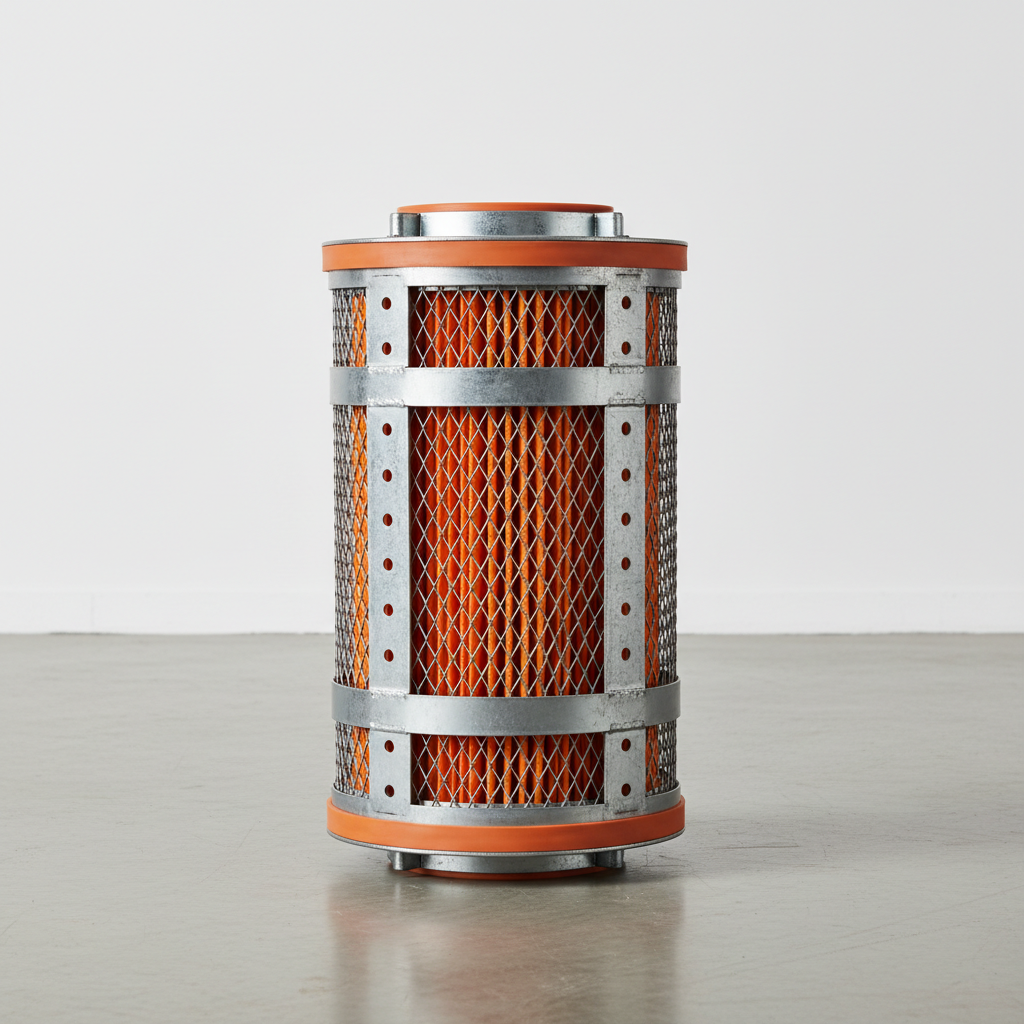
To ensure structural stability, these filters often incorporate electro-galvanized end caps and electroplated galvanized diamond mesh center frames. This combination prevents rust and provides a high opening rate, which is essential for maintaining low resistance while operating under high-load continuous conditions.
Furthermore, the use of special sealed closed-cell elastic neoprene ensures a perfect fit within the housing. This prevents "air bypass," a common failure where unfiltered air leaks around the edges of the 100 micron stainless steel filter or cellulose element, potentially damaging the turbine or compressor.
Key Factors in Filtration Performance
One of the primary factors in determining the effectiveness of a 100 micron stainless steel filter is the surface area. Wide fold designs are implemented in cellulose cartridges to maximize the filtering area, which reduces the velocity of the air passing through the media and improves particle capture.
Durability is another core component, especially when comparing a 100 micron stainless steel filter to disposable options. The use of high-quality electrochemical plates for protective nets ensures that the filter can withstand pressure spikes and corrosive environments without compromising its shape.
Finally, the adhesive quality plays a silent but vital role. Imported high-efficiency adhesives ensure that the bonded parts of the 100 micron stainless steel filter assembly do not crack or degum, guaranteeing a long service life even in temperature ranges from -30 to 105 degrees Celsius.
Comparative Efficiency of Filter Media
When comparing the performance of a 100 micron stainless steel filter against high-efficiency cellulose media, the primary difference lies in the micron rating and the capture mechanism. Stainless steel is ideal for recovery and coarse separation, while cellulose is optimized for fine dust removal.
The following data illustrates the relative performance ratings of different filtration approaches across key industrial metrics, highlighting where a 100 micron stainless steel filter fits into the overall strategy.
Filtration Media Performance Comparison
Global Applications in Heavy Industry
The practical application of a 100 micron stainless steel filter extends across various high-stakes environments. In steel blast furnace blasts and centrifugal air compressors, these filters prevent large scale contaminants from entering the system, which could otherwise cause catastrophic mechanical failure.
Additionally, in remote industrial zones or power plants using diesel engines and steam turbines, the reliability of a 100 micron stainless steel filter is paramount. These systems require long-term operation without frequent maintenance, making the durable, anti-corrosive properties of electrochemical plates highly valuable.
Long-term Value and Sustainability
Investing in a high-quality 100 micron stainless steel filter or a premium cellulose cartridge provides significant long-term economic value. By reducing the frequency of replacement and extending the life of the machinery, companies lower their total cost of ownership and reduce industrial waste.
From a sustainability perspective, the ability to use materials that resist rust and corrosion means fewer discarded components in landfills. The high efficiency of 99.99% for 2µm particles in the cellulose range ensures that air emissions are cleaner, contributing to better environmental health in industrial clusters.
Moreover, the psychological value of trust and safety cannot be overlooked. When plant managers know their 100 micron stainless steel filter system is operating at peak performance, they can focus on production scaling and innovation rather than emergency repairs.
Future Innovations in Air Purification
The future of filtration is moving toward "smart" media that can signal when a 100 micron stainless steel filter is reaching its capacity. Integrating IoT sensors into the filter housing will allow for predictive maintenance, replacing elements based on actual pressure drop rather than a fixed schedule.
We are also seeing a shift toward hybrid materials that combine the strength of a 100 micron stainless steel filter with the microscopic capture capabilities of nanofibers. This evolution aims to create a single-stage filter that offers both extreme durability and ultra-high efficiency.
As green energy becomes the global priority, these advancements will be critical for hydrogen compressors and carbon capture systems. The following table summarizes the evolving specifications of filtration technology.
Evolution of Filtration Specifications and Performance
| Filter Type |
Primary Material |
Durability Score |
Efficiency Range |
| Standard Mesh |
Stainless Steel |
9/10 |
100-500 Micron |
| Cellulose Cartridge |
Wood Pulp Fiber |
7/10 |
2-10 Micron |
| Composite Filter |
Fiber + Steel |
8/10 |
1-50 Micron |
| Nano-Hybrid |
Electrospun Polymer |
6/10 |
0.1-1 Micron |
| Industrial Grade SS |
316L Stainless |
10/10 |
100 Micron |
| Eco-Cellulose |
Recycled Fiber |
5/10 |
5-20 Micron |
FAQS
The primary difference lies in the filtration target and durability. A stainless steel filter is designed for coarse particle removal and is often washable and reusable, whereas cellulose filters are designed for high-efficiency fine dust removal (down to 2 microns) and are generally replaced once clogged.
Yes, stainless steel is highly resistant to heat. However, when used in an assembly like a cellulose cartridge, the overall operating temperature is limited by the adhesives and seals, typically ranging from -30 to 105 degrees Celsius.
Replacement intervals depend on the dust load and flow rate. We recommend monitoring the pressure drop across the filter; once the resistance reaches a specific threshold, the element should be replaced to prevent energy loss and equipment strain.
This means that for every 10,000 particles of 2 microns in size that attempt to pass through the filter media, only one particle will successfully pass through, while 9,999 are captured.
Yes, electro-galvanized caps provide a protective zinc layer that prevents oxidation and rust, which is critical for maintaining the integrity of the seal and the overall lifespan of the filter in humid environments.
Absolutely. Without a high-strength, low-hardness sealing ring, air will take the path of least resistance and leak around the filter element, rendering the filtration process ineffective regardless of the media quality.
Conclusion
Selecting the right filtration solution requires a deep understanding of the trade-offs between the durability of a 100 micron stainless steel filter and the high-precision capture of cellulose wood pulp fibers. By focusing on key factors such as wide fold design, anti-corrosive coatings, and airtight seals, industrial operators can ensure their systems run with maximum efficiency and minimum downtime.
As industry moves toward more sustainable and automated processes, the integration of hybrid materials and smart monitoring will further refine air purification. We encourage engineers to evaluate their specific particulate load and temperature requirements to choose the optimal combination of pre-filtration and high-efficiency cartridges for their unique operational needs. Visit our website for more details: www.onlyfiltercartridge.com

 Email:admin@only-filter.com