 Email:admin@only-filter.com
 Tel:
+8615930870079
Tel:
+8615930870079
Apr . 16, 2026 02:05 Back to list
Industrial Guide for Selecting a Stainless Filter Cartridge
The Ultimate Guide to Selecting a Stainless Filter Cartridge
In the world of industrial filtration, precision and durability are non-negotiable. A high-quality stainless filter cartridge serves as the backbone for maintaining purity in liquid and gas streams, preventing contamination and protecting expensive downstream equipment. Whether you are operating in the pharmaceutical, food and beverage, or petrochemical industry, choosing the right filtration medium can significantly impact your operational efficiency and product quality. In this comprehensive guide, we will explore the technical advantages, material selections, and critical application factors that make stainless steel the gold standard for industrial filtration.
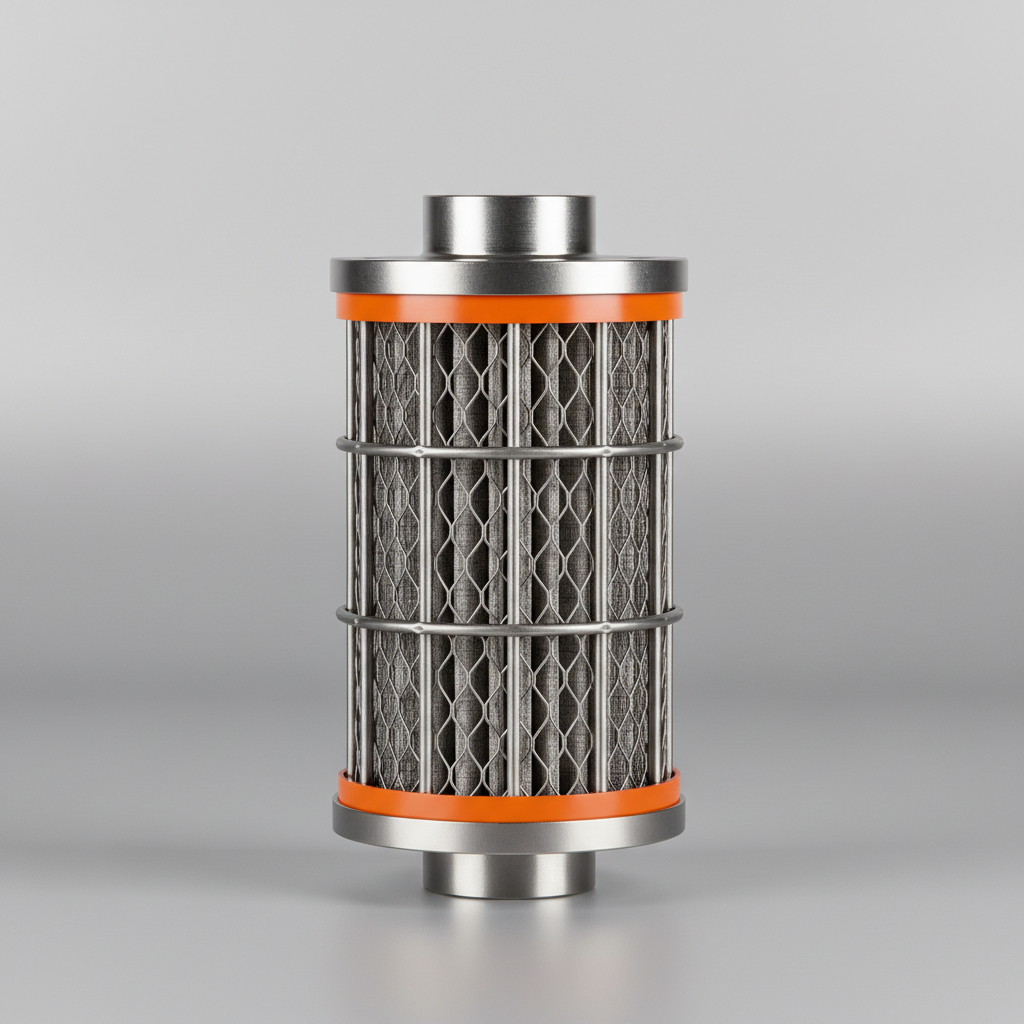
Why Choose a Stainless Filter Cartridge Over Plastic?
When comparing filtration options, the primary advantage of a stainless filter cartridge is its exceptional mechanical strength and chemical resistance. Unlike polymer-based filters, stainless steel does not degrade under high temperatures or when exposed to aggressive solvents. This makes them ideal for "extreme" environments where pressure drops are high and thermal shocks are common. Furthermore, the structural integrity of stainless steel ensures that no filter medium fibers migrate into the filtered fluid, providing a higher level of purity and safety for sensitive processes.
Pro Tip: For maximum corrosion resistance in saltwater or highly acidic environments, always specify 316L stainless steel over 304 to prevent pitting and ensure a longer service life.
Material Specifications for Stainless Filter Cartridges
Not all stainless steels are created equal. The performance of your stainless filter cartridge depends heavily on the grade of steel and the construction method (sintered vs. woven mesh). Sintered filters offer a rigid structure and precise pore sizes, whereas woven mesh is often preferred for coarser filtration and easier cleaning. Understanding these specifications is key to optimizing your system's flow rate and filtration efficiency.
The Economic Value of Cleanable Stainless Filter Cartridges
One of the most compelling arguments for utilizing a stainless filter cartridge is its reusability. While disposable cartridges lead to continuous procurement costs and significant industrial waste, stainless steel options can be cleaned via back-flushing or ultrasonic baths. This "wash-and-reuse" cycle dramatically lowers the Total Cost of Ownership (TCO) over the lifespan of the equipment. For high-volume production lines, the reduction in downtime for filter replacements translates directly into increased profitability.
Common Industrial Applications of Stainless Filtration
The versatility of the stainless filter cartridge allows it to excel across diverse sectors. In the food and beverage industry, they ensure sterile processing without leaching chemicals into the product. In the oil and gas sector, they remove particulates from lubricants and fuels to prevent engine wear. Even in the pharmaceutical sector, the ability to withstand Steam-in-Place (SIP) sterilization makes them indispensable. Their ability to handle high pressure and extreme temperature swings makes them the only viable choice for many critical process loops.
Optimizing the Life of Your Stainless Filter Cartridge
To maximize the efficiency of your stainless filter cartridge, a rigorous maintenance schedule is essential. Monitoring the differential pressure (ΔP) across the filter is the most effective way to determine when cleaning is required. If the pressure drop exceeds the recommended limit, the filter is likely blinded. Using a combination of back-pulsing and chemical cleaning can restore the original permeability of the sintered steel, ensuring the system continues to operate at peak flow rates without compromising filtration quality.
Technical Comparison: Sintered vs. Woven Mesh
Choosing between sintered and woven construction for your stainless filter cartridge depends on your specific micron requirements. Sintered filters are created by fusing metal powder, resulting in a depth filtration effect that captures more contaminants. Woven mesh provides surface filtration, which is generally easier to clean but offers less "dirt-holding" capacity. Below is a detailed technical comparison to help you decide based on your operational needs.
Conclusion: Elevating Industrial Standards with Stainless Steel
Investing in a premium stainless filter cartridge is a strategic decision that balances immediate performance with long-term operational costs. By providing unmatched durability, chemical resistance, and the ability to be cleaned and reused, these cartridges far outperform traditional disposable options. Whether you prioritize the precision of sintered steel or the ease of woven mesh, selecting the correct grade and structure will ensure your processes remain contamination-free and efficient. Secure your production quality by choosing the right filtration technology today.
Frequently Asked Questions (FAQs)
How often should I clean my stainless filter cartridge?
The cleaning frequency depends entirely on the contaminant load of your process fluid. The most scientific way to determine this is by installing a differential pressure gauge. When the pressure difference between the inlet and outlet reaches a specific threshold (defined by the manufacturer), it is time to clean the cartridge. For some systems, this may be once a week, while for cleaner processes, it could be once every six months. Over-cleaning can cause unnecessary wear, while under-cleaning can lead to system failure.
Can I use a 304 stainless filter in a saltwater environment?
It is not recommended. 304 stainless steel lacks sufficient molybdenum to resist chloride-induced pitting and crevice corrosion common in saltwater or brine environments. Using 304 in these conditions will lead to rapid degradation and potential failure of the filter medium. For any application involving salts, marine environments, or high-chloride chemicals, we strongly recommend using 316L stainless steel, which is specifically engineered to withstand such corrosive elements.
What is the difference between "sintered" and "woven" stainless steel?
Sintered stainless steel is made by compacting metal powder under high pressure and heat, creating a porous, rigid structure that provides depth filtration. This means particles are trapped throughout the thickness of the wall. Woven mesh is made by weaving wires together, creating a screen that provides surface filtration. Sintered filters generally offer a higher precision micron rating and more dirt-holding capacity, whereas woven filters are typically used for coarser filtration and are often easier to rinse clean quickly.
How do I choose the correct micron rating for my application?
Choosing the correct micron rating requires a balance between purity and flow rate. A lower micron rating (e.g., 1-5 microns) provides higher purity but increases the risk of rapid clogging and higher pressure drops. A higher micron rating (e.g., 50-100 microns) allows for higher flow rates and longer intervals between cleanings but lets more particles pass through. We recommend analyzing your contaminant size distribution and choosing the largest possible pore size that still meets your quality specifications to optimize efficiency. You can find more guidance on the Only Filter Cartridge website.
-
High-Efficiency Adsorption for Clean Air & Water PurificationNewsApr.20,2026
-
Air Filter Cartridge: High-Efficiency Filtration for Engine Protection & Clean Air SupplyNewsApr.17,2026
-
Filter Paper: Precision Filtration Media for Industrial & Laboratory ExcellenceNewsApr.16,2026
-
Dust Filter Cartridges: High-Efficiency Industrial Filtration for Clean Production & ComplianceNewsApr.15,2026
-
Filter Paper: High-Efficiency Filtration Solution for Industrial & Laboratory UseNewsApr.14,2026