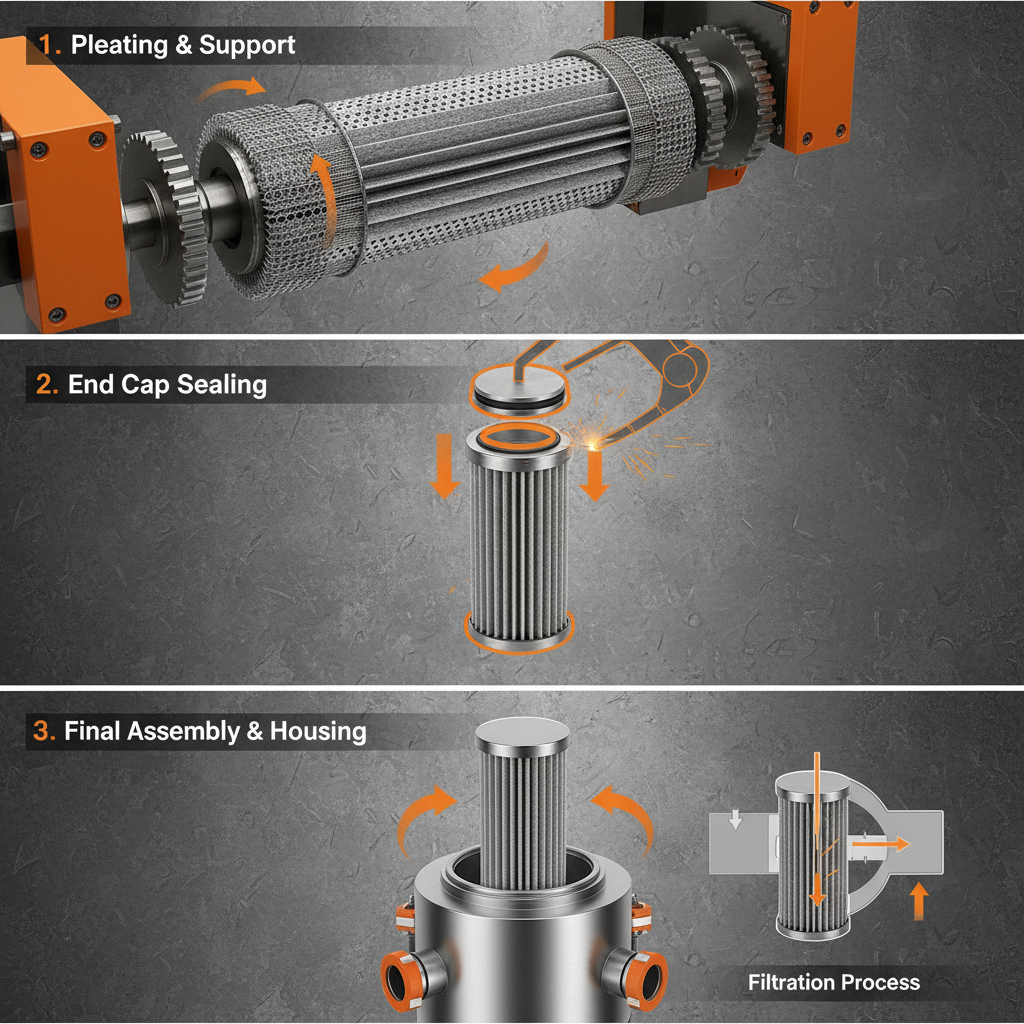
Maintaining high indoor air quality has become a global priority as industrialization and urbanization increase the prevalence of airborne pollutants. Among the various technologies available, air filter cartridges utilizing activated carbon stand out as a critical defense against volatile organic compounds (VOCs), odors, and hazardous gases. By leveraging a high-surface-area carbon medium, these components ensure that breathable air is stripped of harmful chemical vapors, safeguarding human health in diverse environments.
From a global industrial perspective, the demand for advanced air purification is driven by stringent environmental regulations and ISO standards concerning workplace safety. In many sectors, simply filtering dust is insufficient; the removal of molecular-level contaminants requires the specific chemical and physical adsorption properties found in professional-grade air filter cartridges. This shift toward comprehensive air treatment reflects a broader commitment to sustainable industrial practices and occupational health.
Understanding the mechanics and application of these filtration systems allows facility managers and engineers to optimize their ventilation strategies. Whether deployed in a high-tech laboratory or a commercial HVAC system, the right choice of activated carbon media can significantly reduce the energy cost of air exchange while maximizing the removal efficiency of specific pollutants. This guide explores the technical depth and practical utility of these essential air purification components.
The Mechanism of Activated Carbon Air Filter Cartridges
The effectiveness of air filter cartridges based on activated carbon lies in their dual-action adsorption mechanism. Physical adsorption occurs when pollutants are trapped within the vast, microscopic pore structure of the carbon, which provides an immense specific surface area. This is ideal for capturing larger organic molecules and general odors that gravitate toward the carbon's internal architecture.
Complementing this is chemical adsorption, where specific functional groups on the carbon's surface react chemically with pollutants. This process is essential for the removal of highly reactive gases and specific toxic vapors that physical trapping alone cannot manage. Together, these mechanisms allow the filter to maintain high removal efficiency across a broad spectrum of harmful substances.
Core Performance Features and Material Standards
High-performance air filter cartridges are engineered using granular activated carbon treated with specialized chemical formulas to enhance their affinity for specific toxins. This ensures that the adsorption capacity remains strong even under high airflow conditions, providing reliable performance for critical air purification tasks in medical or industrial settings.
The structural integrity of these cartridges is equally important to prevent bypass and ensure maximum contact time between the air and the media. Depending on the environment, the filter cartridge material can be constructed from galvanized steel plates for standard applications or high-grade stainless steel for corrosive environments. This flexibility in material ensures that the housing can withstand the pressures of centralized ventilation systems.
Furthermore, the external frames are designed for versatility, typically crafted from cold-rolled steel plates with a protective spray coating or stainless steel. These frames can be customized and assembled according to the required gas processing capacity of the facility, ensuring that the filter fits seamlessly into existing industrial layouts without compromising airflow.
Strategic Applications in Commercial and Industrial HVAC
In modern commercial architecture, air filter cartridges are indispensable for central air conditioning and centralized ventilation systems. Their primary role is to remove pervasive odors, stench, and harmful gases that can accumulate in crowded office spaces or large shopping complexes, ensuring a healthy atmosphere for occupants.
Industrial applications extend to highly specialized environments such as laboratories and medical facilities, where the presence of organic vapors or chemical fumes could pose severe health risks. In these zones, the high removal efficiency of activated carbon ensures that hazardous substances are captured before they can enter the general ventilation stream.
Beyond standard HVAC, these cartridges are used in specialized industrial ventilation systems to meet strict regulatory air purification standards. By integrating air filter cartridges, factories can effectively manage emissions and protect workers from the chronic effects of inhaling chemical pollutants.
Comparative Efficiency of Adsorption Media
The selection of the adsorption medium within air filter cartridges directly impacts their efficacy against different pollutants. While standard granular carbon is excellent for general VOCs, specialized materials are required for acidic gases, alkaline vapors, or radioactive particles. The choice depends on the molecular weight and polarity of the target pollutant.
When comparing different media types, the focus is usually on the "breakthrough time"—the point at which the medium is saturated and pollutants begin to pass through. High-quality chemically treated carbons significantly extend this window, reducing the frequency of replacement and lowering the total cost of ownership for the facility manager.
Removal Efficiency Rating by Pollutant Type for Air Filter Cartridges
Long-Term Value and Operational Sustainability
Investing in high-quality air filter cartridges provides significant long-term value through reduced maintenance costs. One of the most sustainable features of these systems is the use of reusable metal shells. Instead of replacing the entire unit, only the adsorption media needs to be swapped, which drastically reduces industrial waste and raw material consumption.
From an operational standpoint, the ease of installation and maintenance ensures that downtime is kept to a minimum. By utilizing replaceable media and robust housings, companies can maintain a consistent air quality standard without the need for expensive system overhauls, blending economic efficiency with environmental responsibility.
Innovations in Specialized Gas Removal
The evolution of air filter cartridges has led to the development of specialized carbon materials tailored for extreme pollutants. Recent innovations focus on the modification of pore sizes and the addition of catalysts to target mercury vapor, radioactive gases, and highly volatile organic compounds that traditional carbon might miss.
These specialized materials allow for targeted purification, meaning a facility can deploy a specific cartridge designed for formaldehyde in a furniture factory, or a mercury-specific filter in a laboratory. This precision prevents the "clogging" of the filter with non-target molecules, thereby extending the lifespan of the media.
Furthermore, the integration of advanced carbon-composite materials is enhancing the mechanical strength of the media, reducing the risk of carbon dusting—where small particles of carbon escape into the airstream. This ensures that the air coming out of the system is not only chemically pure but also free of particulate debris.
Technical Selection and Maintenance Analysis
Selecting the correct air filter cartridges requires a detailed analysis of the gas processing capacity and the specific nature of the pollutants. Engineers must balance the pressure drop across the filter with the required removal efficiency to ensure that the ventilation fans are not overstressed while still achieving air purity targets.
Regular maintenance is key to preventing saturation. When the activated carbon reaches its adsorption limit, its efficiency drops sharply. Implementing a scheduled replacement cycle for the adsorption media, while retaining the reusable metal shell, ensures that the system operates at peak performance throughout its lifecycle.
Ultimately, the combination of high-grade shell materials (such as stainless steel) and precision-engineered carbon media allows for a scalable solution. Whether it is a single cartridge for a small office or a massive array for a centralized industrial plant, the principles of adsorption remain the most reliable method for gas-phase air purification.
Core Technical Specifications and Material Compatibility for Air Filter Cartridges
| Component |
Material Option A |
Material Option B |
Primary Benefit |
| Filter Cartridge Shell |
Galvanized Steel |
Stainless Steel |
Corrosion Resistance |
| Support Frame |
Spray-coated Steel |
Stainless Steel |
Structural Stability |
| Adsorption Media |
Granular Activated Carbon |
Impregnated Carbon |
Targeted Gas Removal |
| Seal Material |
Industrial Rubber |
Silicone/EPDM |
Air-tight Leak Prevention |
| Treatment Type |
Physical Adsorption |
Chemical Adsorption |
Removal Efficiency |
| Maintenance Cycle |
Media Replacement |
Shell Reuse |
Operational Cost Reduction |
FAQS
Dust filters are designed to capture particulate matter (physical particles) through mechanical straining. In contrast, activated carbon air filter cartridges are designed for gas-phase filtration. They use adsorption to remove molecular-level pollutants such as VOCs, chemical vapors, and odors that are far too small for a standard dust filter to stop.
Yes, provided the shell is made of durable materials like stainless steel or galvanized steel and is not subjected to extreme chemical corrosion. The core value of our design is the reuse of the metal shell; only the internal activated carbon adsorption media needs to be replaced once it becomes saturated.
Replacement frequency depends on the pollutant concentration and airflow volume. Typically, media should be replaced when a "breakthrough" is detected (e.g., odors return) or according to a predetermined schedule based on the gas processing capacity of the system. Regular monitoring is recommended to ensure continuous air quality.
For corrosive environments, we strongly recommend stainless steel for both the cartridge shell and the support frame. Stainless steel prevents rust and degradation caused by acidic or alkaline vapors, ensuring the structural integrity of the filter and preventing contamination of the filtered air.
Yes, but this requires specialized adsorption media. While standard activated carbon removes general VOCs, we provide specially treated carbon materials designed to chemically bond with formaldehyde, mercury vapor, and radioactive gases to ensure high removal efficiency for those specific toxins.
Absolutely. Our frames can be provided and assembled according to your specific gas processing capacity and duct dimensions. Because they are designed for commercial and industrial central air conditioning systems, they integrate seamlessly into standard ventilation layouts with minimal modification.
Conclusion
In summary, air filter cartridges utilizing activated carbon are an essential component for any facility requiring high-level air purification. By combining physical and chemical adsorption, these systems effectively eliminate VOCs, hazardous gases, and odors, while the use of reusable metal shells provides a sustainable and cost-effective solution for long-term operation.
As industrial standards for air quality continue to evolve, the transition toward specialized, high-efficiency filtration is no longer optional but a necessity for health and safety. We recommend regularly auditing your ventilation systems and choosing media tailored to your specific pollutants to ensure maximum protection and operational efficiency. Visit our website for more information: www.onlyfiltercartridge.com

 Email:admin@only-filter.com