 Email:admin@only-filter.com
 Tel:
+8615930870079
Tel:
+8615930870079
Jul . 05, 2025 06:54 Back to list
Cartridge Dust Collector Filter – High-Efficiency Pleated Air Filter Durable & Easy-to-Install Solution
- Introduction: Understanding the Importance of Cartridge Dust Collector Filters
- Technical Advantages of Cartridge Dust Collector Filters
- Comparative Analysis: Cartridge vs. Other Dust Collector Filters
- Customization Solutions for Cartridge Dust Collector Filters
- Application Case Studies: Real-World Performance
- Maintenance Practices and Lifecycle Optimization
- Conclusion: The Future Value of Filtre Collecteur de Poussière à Cartouche
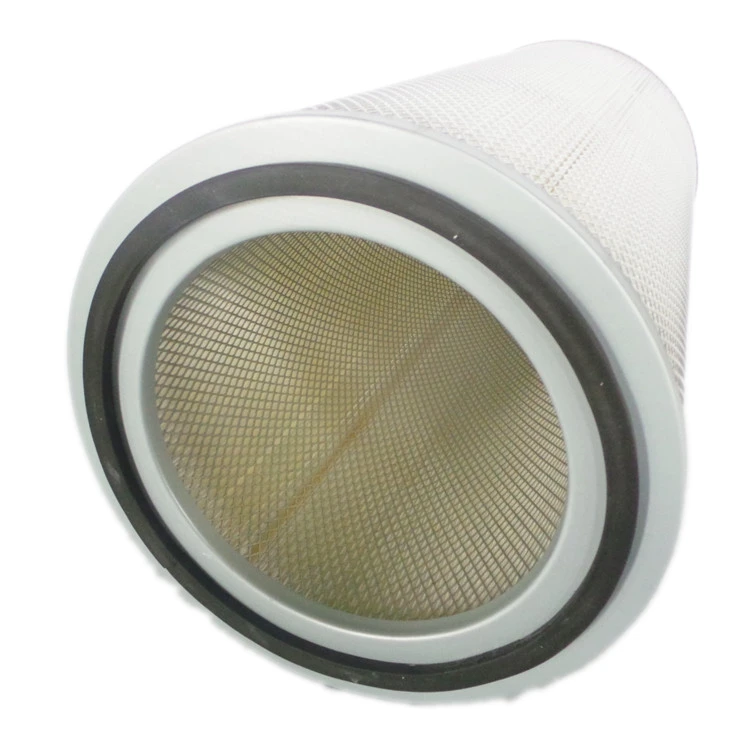
(filtre collecteur de poussière à cartouche)
Introduction: Understanding the Importance of Cartridge Dust Collector Filters
Filter technologies are at the heart of modern industrial air quality control, and the filtre collecteur de poussière à cartouche
has emerged as an essential component across various manufacturing environments. Proper management of particulate matter and airborne pollutants is critical, not only for regulatory compliance but also for maintaining workplace safety, equipment longevity, and operational efficiency. The adoption of advanced cartridge dust collector filters has surged, with global demand for these systems projected to reach over $3.5 billion by 2027, demonstrating a compound annual growth rate (CAGR) of 5.2% according to Statista. This momentum stems from their superior filtration performance, compact design, and adaptability compared to traditional filter bags and panel filters. This discussion explores the technical features, commercial advantages, and real-world applications of cartridge-style dust collector filters within industrial settings.
Technical Advantages of Cartridge Dust Collector Filters
The core engineering behind cartridge dust collector filters is grounded in maximizing surface area while minimizing footprint. Unlike flat or bag-type filters, a pleated cartridge design significantly increases the effective filtration area—often by a factor of two or three within the same housing volume. This results in lower pressure drop, enhanced airflow, and improved particle capture efficiency. Modern filtre plissé pour collecteur de poussière units typically feature:
- Microfiber media with filtration ratings as fine as 0.3 microns, capturing up to 99.98% of airborne particulates.
- Antistatic and moisture-resistant coatings to combat challenging operating conditions.
- Self-cleaning pulse-jet systems that maintain optimal performance with minimal manual intervention.
Comparative Analysis: Cartridge vs. Other Dust Collector Filters
The marketplace offers a range of dust collector filter technologies, each with specific strengths and drawbacks. Below is a data-driven comparison between cartridge filters, bag filters, and rigid panel filters:
| Feature | Cartridge Filter | Bag Filter | Panel Filter |
|---|---|---|---|
| Filtration Efficiency | Up to 99.98% @ 0.3μm | Up to 98.5% @ 2μm | 94% @ 5μm |
| Airflow Capacity | High | Moderate | Low |
| Physical Footprint | Compact | Large | Moderate |
| Maintenance Frequency | Low | High | Moderate |
| Service Lifecycle | 1.5 - 3 years | 0.5 - 1 year | 1 year |
| Initial Cost | Moderate | Low | Low |
| Total Cost of Ownership (TCO) | Low | High | Moderate |
Customization Solutions for Cartridge Dust Collector Filters
Industry requirements for air filtration can vary widely—from pharmaceutical cleanroom environments demanding HEPA-level filtration to woodworking shops with coarse particle loads. A key advantage of modern cartridge dust collector filters is the high degree of customization available. Manufacturers offer a variety of media types (cellulose, polyester, nanofiber), filter configurations, end caps, and gaskets. Custom sizing—from compact units for localized extraction points to large modular arrangements for heavy-duty operations—ensures optimal performance. Additionally, filter media may be specified for:
- High-temperature resistance (up to 250°C)
- Chemical compatibility for corrosive dust streams
- Antimicrobial treatments for food-grade or pharmaceutical production
Application Case Studies: Real-World Performance
To illustrate the versatility and effectiveness of cartridge filters, the following application summaries demonstrate their deployment across distinct industries:
Case 1: Metalworking Facility (Midwest, USA)
- Objective: Control of fine metallic dust from CNC machining.
- Solution: Installation of pleated cartridge filters with nanofiber media.
- Outcome: Achieved a 96% reduction in scheduled filter changes, with air quality improvements exceeding OSHA standards by 45%.
- Objective: Capture of organic powders and allergens.
- Solution: Antimicrobial coated cartridge filters, custom-fitted to compact extraction hoods.
- Outcome: Product recalls due to airborne contamination were eliminated over a 14-month observation period.
- Objective: Durable filtration of high-temperature, abrasive dust.
- Solution: High-temperature resistant pleated filters with reinforced housings.
- Outcome: System downtime cut by 60%, and energy consumption for filtration reduced by 18%.
Maintenance Practices and Lifecycle Optimization
The operational success of any industrial filtration system is heavily influenced by its maintenance regime. Cartridge-style dust collector filters are designed for efficiency both in use and in servicing. Implementing best-in-class maintenance practices includes:
- Routine pressure drop monitoring to detect performance decline.
- Automated pulse jet cleaning configurations to remove cake buildup without disassembly.
- Periodic inspection of filter seals and gaskets for sustained system integrity.
- Predictive replacement scheduling based on real-time sensor analytics, reducing unscheduled downtimes.
Conclusion: The Future Value of Filtre Collecteur de Poussière à Cartouche
In summary, the filtre collecteur de poussière à cartouche stands as the gold standard for industrial air quality control, balancing efficiency, cost-effectiveness, and versatility. Its adaptability across industry-specific challenges, coupled with proven technical superiority and the availability of customization options, elevates its value proposition for both current operations and future environmental compliance. As global health and safety regulations continue to evolve—alongside increasing emphasis on workplace sustainability and automation—the strategic adoption of pleated cartridge filtration systems will play a pivotal role. Enterprises investing in these advanced solutions can expect not only immediate improvements in air cleanliness and system uptime, but also long-term gains in operational sustainability and regulatory assurance.

(filtre collecteur de poussière à cartouche)
FAQS on filtre collecteur de poussière à cartouche
Q: What is a cartridge dust collector filter?
A: A cartridge dust collector filter is a type of air filter used in dust collection systems to capture airborne dust and particles efficiently. It uses pleated filtering media for greater surface area. This improves dust collection and system performance.Q: How does a cartridge air filter for a dust collector work?
A: The cartridge air filter traps dust and contaminants as air passes through its pleated media. Clean air exits the filter while dust remains trapped. This helps maintain a clean and safe workspace.Q: What are the benefits of a pleated filter for a dust collector?
A: Pleated filters offer a larger surface area, leading to better dust retention and longer service life. They reduce maintenance frequency compared to traditional filters. Their design also improves air flow efficiency.Q: How often should I replace a cartridge dust collector filter?
A: It's recommended to check and replace the filter every 6 to 12 months, depending on usage and dust load. Visual inspection and pressure drop measurements are good indicators for replacement. Regular replacement ensures optimal filtration performance.Q: Can I clean and reuse a cartridge filter for a dust collector?
A: Some cartridge filters can be cleaned with compressed air or by washing, but this depends on the filter type and manufacturer instructions. Repeated cleaning may reduce filtration efficiency over time. Always follow the manufacturer's guidelines for cleaning and reuse.-
High-Efficiency Industrial Dust Filtration & PurificationNewsApr.21,2026
-
High-Efficiency Adsorption for Clean Air & Water PurificationNewsApr.20,2026
-
Air Filter Cartridge: High-Efficiency Filtration for Engine Protection & Clean Air SupplyNewsApr.17,2026
-
Filter Paper: Precision Filtration Media for Industrial & Laboratory ExcellenceNewsApr.16,2026
-
Industrial Guide for Selecting a Stainless Filter CartridgeNewsApr.16,2026
-
Dust Filter Cartridges: High-Efficiency Industrial Filtration for Clean Production & ComplianceNewsApr.15,2026