 Email:admin@only-filter.com
 Tel:
+8615930870079
Tel:
+8615930870079
Oct . 25, 2025 13:15 Back to list
Dust Collector Pleated Filter | High-Efficiency, Long Life
Industrial Pleated Dust Collection Cartridges: What buyers are really asking in 2025
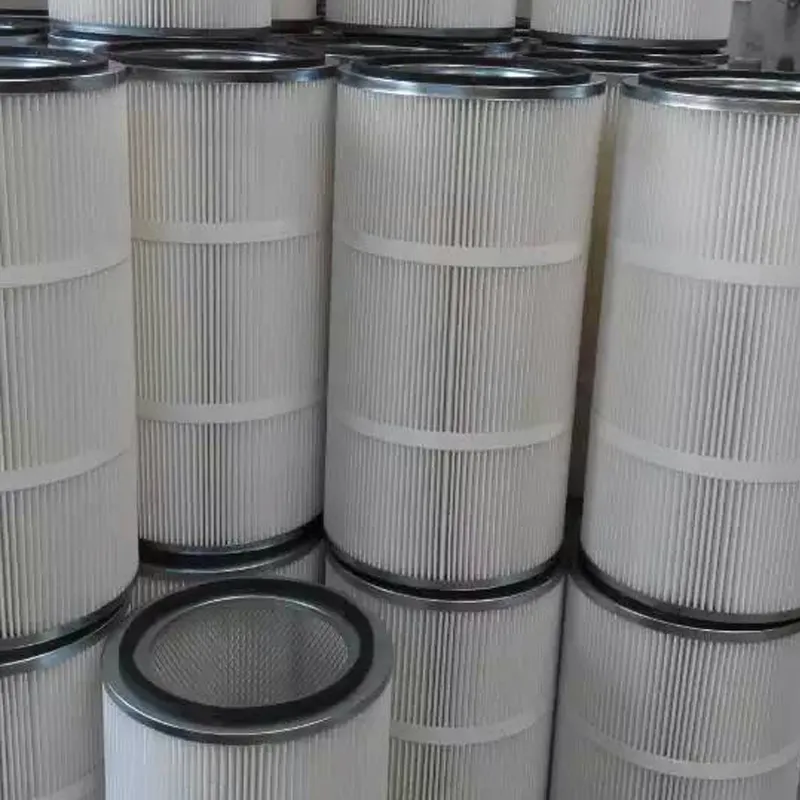
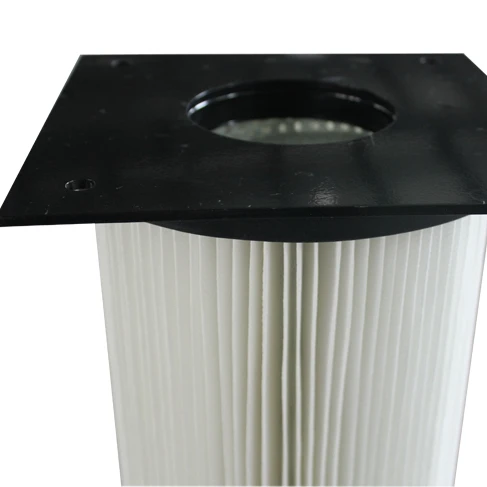
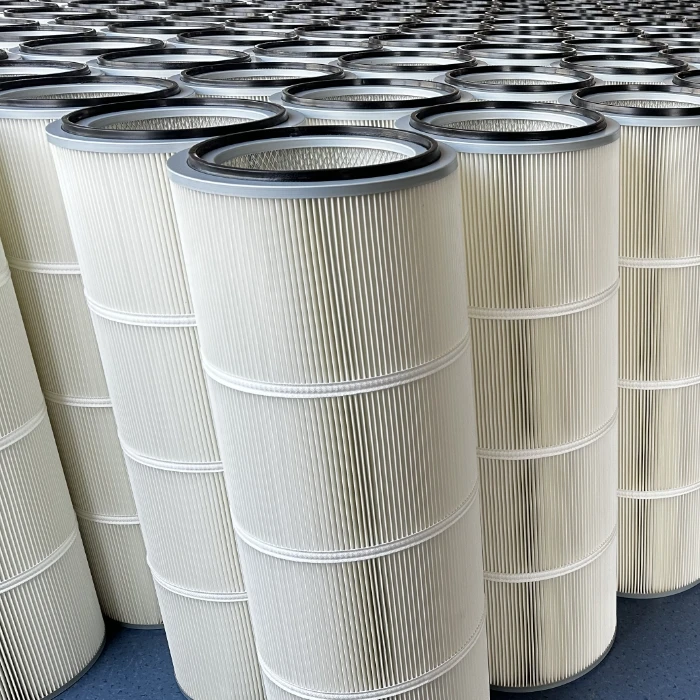
If you’re sizing up a Dust Collector Pleated Filter for a retrofit or a new baghouse, here’s the short version: media matters, pulse cleaning matters, and proving compliance matters even more. The model under discussion—Industrial pleated dust collection cartridges—comes out of Rongding World, Xinhua District, Shijiazhuang City, Hebei Province. It’s a sturdy, replaceable core that’s designed to capture fine particulate efficiently and keep fan energy under control. Sounds simple; actually, the details decide your OPEX.
What’s trending (and why it matters)
Tightening PM2.5 limits and energy targets are nudging plants toward nanofiber and PTFE-membrane media, lower ΔP designs, and smarter pulse-jet setups. To be honest, many customers say their biggest wins came from switching to surface-loading media that releases dust faster, not from buying bigger fans. We’re also seeing ISO 16890 language in specs more often, replacing the old alphabet soup, which is a good thing for clarity.
Core specs at a glance
| Media options | Cellulose–polyester blend, spunbond polyester, nanofiber overlay, PTFE membrane |
| Filtration class | ISO 16890 ePM1 70–85% (≈ MERV 14–15), real-world use may vary |
| Initial ΔP | ≈120–170 Pa at 1.5 m/s face velocity (lab) |
| Media area | ≈12–24 m² per cartridge depending on length/pleat count |
| Dimensions | OD ≈ 215–352 mm; length 660–1000 mm; custom flanges/gaskets |
| Temperature | Up to 70°C standard; up to 120°C polyester/aramid options |
| Service life | ≈6–18 months, depending on dust loading and pulse settings |
| End caps / gasket | Galvanized or stainless steel; PU potting; EPDM/NBR gasket |
How it’s made (quick process flow)
Materials: cellulose–polyester base or spunbond polyester; optional nanofiber electrospun top layer; PTFE membrane for sticky or submicron dust; steel end caps; polyurethane potting; molded gasket.
Methods: precision pleating (rotary/knife), hot-melt bead spacing, seam bonding, membrane lamination, potting and cure, final crimp and gasket fitment. Testing: ISO 16890 efficiency classification, ASHRAE 52.2 MERV check where specified, initial/burst pressure, pulse-clean recovery, and gravimetric loading. I guess the sleeper metric is recovery ΔP after 500–1,000 pulses—good media comes back fast.
Where it’s used
Cement and minerals, metalworking and welding fume capture, woodworking and MDF, grain and food, powder coating/spray booths, pharma blending, battery and 3D printing rooms. Many customers say PTFE wins with sticky flour or TiO2 dusts; nanofiber shines in welding fume and fine PM.
Advantages you can feel in OPEX
- Lower fan energy thanks to stable low ΔP
- Faster pulse release on surface-loading media
- Consistent emissions—easier to document for auditors
- Drop-in replacement; easy changeouts reduce downtime
Vendor snapshot (informal, but useful)
| Vendor | Origin | Media options | Lead time | Certs | Price level |
|---|---|---|---|---|---|
| OnlyFilter (Industrial pleated dust collection cartridges) | Rongding World, Shijiazhuang, Hebei | Cellulose/Spunbond/Nanofiber/PTFE | ≈7–15 days | ISO 9001, ISO 16890 test reports | Mid (cost-efficient) |
| Global Brand A | EU/US | Nanofiber, PTFE | ≈2–4 weeks | ISO 9001, 14001 | High |
| Regional Maker B | APAC | Cellulose/Polyester | ≈10–20 days | Factory QA | Low |
Customization and real-world notes
Flange styles (round/square), inner core types, gasket durometer, antistatic media, and food-grade options are all doable. In fact, one woodworking plant swapped to Dust Collector Pleated Filter cartridges with nanofiber and saw ΔP drop ≈18% and a 12% fan energy cut. Another (cement line) shifted to PTFE membranes; stack PM trended from 18 mg/Nm³ to 4–6 mg/Nm³ after a week’s conditioning—surprisingly steady even during kiln upsets.
Compliance, tests, and paperwork (don’t skip this)
- Efficiency per ISO 16890; optional ASHRAE 52.2 MERV correlation
- Initial/burst pressure data; ΔP recovery after pulse cycles
- Food-contact statements (when required), RoHS/reach materials statements
- Combustible dust: coordinate with NFPA 652/68 for grounding and venting; some media available antistatic
- Method 5/IEd reporting support from plant stack tests
Quick feedback from users: “lower noise at the fan,” “less re-entrainment,” and “changeouts got faster.” Not scientific, but you hear it a lot.
Authoritative citations
- ISO 16890 series: Air filters for general ventilation (classification by particle size)
- ASHRAE 52.2: Method of Testing General Ventilation Air-Cleaning Devices for Removal Efficiency
- NFPA 652: Standard on the Fundamentals of Combustible Dust
- OSHA Combustible Dust NEP (CPL 03-00-008) and related 29 CFR 1910 guidance
- EU Industrial Emissions Directive (IED) and BAT conclusions for PM emissions
- US EPA Method 5: Determination of Particulate Matter Emissions from Stationary Sources
-
High-Efficiency Industrial Dust Filtration & PurificationNewsApr.21,2026
-
High-Efficiency Adsorption for Clean Air & Water PurificationNewsApr.20,2026
-
Air Filter Cartridge: High-Efficiency Filtration for Engine Protection & Clean Air SupplyNewsApr.17,2026
-
Filter Paper: Precision Filtration Media for Industrial & Laboratory ExcellenceNewsApr.16,2026
-
Industrial Guide for Selecting a Stainless Filter CartridgeNewsApr.16,2026
-
Dust Filter Cartridges: High-Efficiency Industrial Filtration for Clean Production & ComplianceNewsApr.15,2026