In the demanding world of industrial air filtration, the efficiency of an inner air filter system is paramount to ensuring the longevity of heavy machinery. From gas turbines to large-scale compressors, the ability to strip microscopic contaminants from the intake air prevents catastrophic engine wear and maintains operational stability. Understanding the nuances of cellulose-based filtration is the first step toward optimizing system performance and reducing unplanned downtime.
Global industrial standards, including those set by ISO, emphasize the critical nature of particulate control in environmental control equipment. As factories move toward higher automation and stricter emission controls, the role of a high-performance inner air filter has shifted from a simple consumable to a strategic asset. Failure to maintain these components often leads to increased energy consumption and a significant drop in thermal efficiency across power generation units.
By utilizing imported special composite filter papers and advanced folding technologies, modern filtration solutions provide an optimal balance between high air permeability and low resistance. For those managing complex systems like steel blast furnaces or centralized air-conditioning, integrating a premium inner air filter ensures that only the cleanest air reaches the core machinery, thereby maximizing the service life of the entire installation.
Advanced Materials in Cellulose Filtration
The core of a high-efficiency inner air filter lies in the quality of its media. By utilizing high-quality wood pulp fiber materials sourced from the United States and Western Europe, these cartridges achieve a rare combination of small pore size and large air permeability. This ensures that the filtration process does not choke the engine, providing low resistance while maintaining a rigorous barrier against fly ash and floating dust.
Furthermore, the use of imported special composite filter paper allows for enhanced particle capture. This material science approach ensures that the filter can handle the high-load continuous operations typical of diesel engines and steam turbines without compromising the structural integrity of the cellulose fibers.
Engineering the Perfect Air Flow
To maximize the effectiveness of an inner air filter, the physical geometry of the pleats is critical. The implementation of internationally advanced folding technology ensures that intervals are perfectly even, which prevents "channeling"—a common failure where air bypasses the media through gaps.
A wide-fold design is employed to create a massive filtering area within a compact cylindrical footprint. By increasing the surface area, the velocity of the air passing through the media is reduced, which significantly lowers the pressure drop and allows the filter to capture more contaminants before reaching its saturation point.
This engineering precision is what differentiates a standard cartridge from a professional-grade inner air filter. By optimizing the ratio between the flow rate and the filtration area, operators can extend the replacement intervals, thereby reducing maintenance costs and improving overall system uptime.
Durability and Corrosion Resistance
In harsh industrial environments, the structural components of an inner air filter are just as important as the filter media itself. Electro-galvanized end caps are utilized to ensure that the unit will not rust even when exposed to humid or corrosive atmospheres.
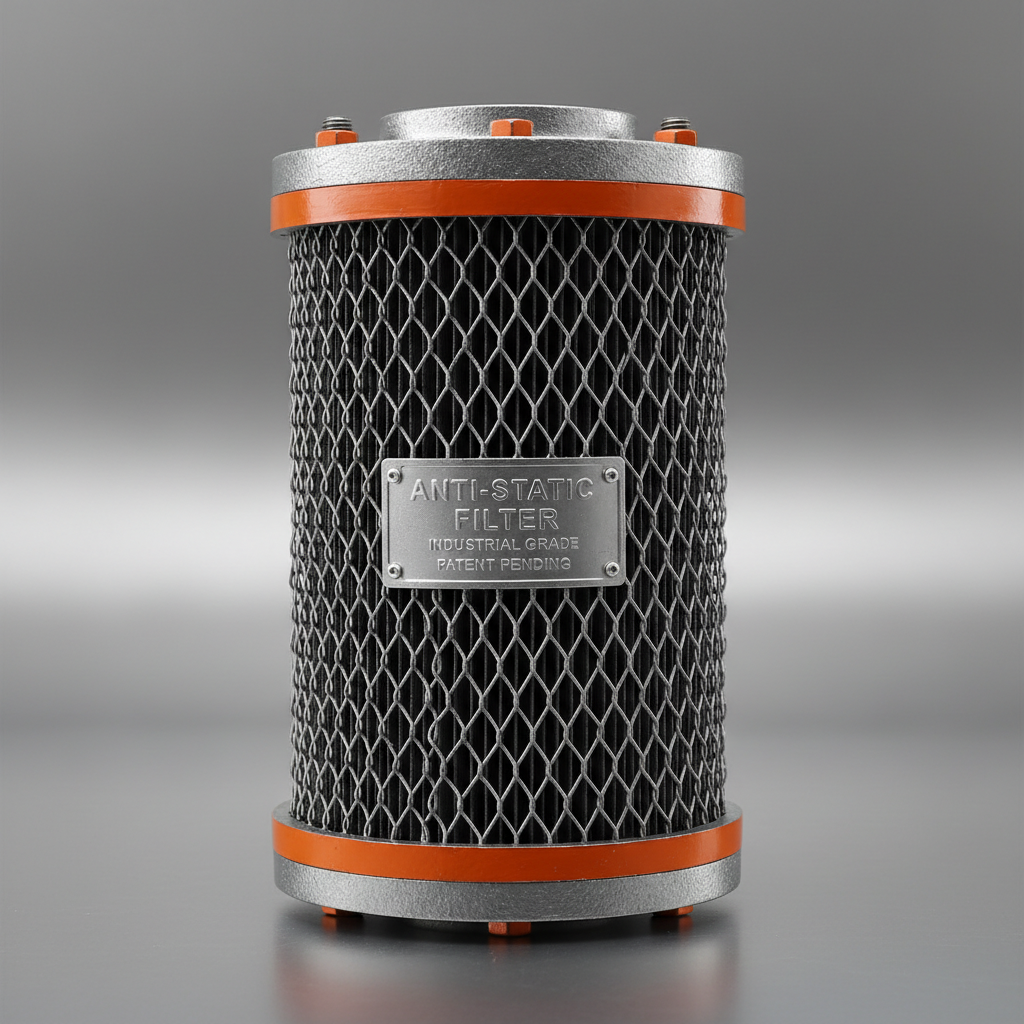
The inner and outer protective nets, combined with the diamond mesh center frame, are crafted from high-quality electrochemical plates. This specific choice of material for the inner air filter provides a high opening rate, ensuring that the structural support does not obstruct the airflow.
These anti-corrosion properties are essential for long-term operations in steel blast furnaces or coastal industrial zones. By preventing rust and degradation, the filter maintains its mechanical strength, preventing the collapse of the media under high-pressure differentials.
Performance Metrics and Efficiency
The true value of an inner air filter is measured by its filtration efficiency and its ability to maintain a steady flow rate. For particles as small as 2µm, a high-tier cellulose cartridge can achieve an efficiency rating of 99.99%, virtually eliminating the risk of abrasive particles entering the combustion chamber.
Balancing the flow rate (m3/h) against the filter area (m2) is the key to avoiding premature clogging. When the inner air filter is designed with an optimal surface-to-volume ratio, it ensures that the equipment operates within its intended temperature and pressure parameters.
Filtration Performance Comparison by Model
Global Industrial Applications
The versatility of the inner air filter makes it indispensable across diverse sectors. In the energy sector, gas turbines and steam turbines rely on these cartridges to ensure that intake air is free from contaminants that could erode turbine blades. Similarly, in the manufacturing of tobacco and pharmaceutical products, the recovery of dust coating powder is managed through high-efficiency cellulose filtration.
Beyond power generation, these filters are critical for centrifugal air compressors and diesel engines operating in remote industrial zones. Whether it is a steel blast furnace in an urban center or a remote mining operation, the ability to maintain air cleanliness directly correlates to the reduction of operational risk and the extension of machinery life.
Ensuring Seal Integrity and Safety
One of the most overlooked aspects of an inner air filter is the sealing mechanism. A leak in the seal allows unfiltered air to bypass the media entirely, rendering the most expensive filter useless. To prevent this, a unique closed-cell elastic neoprene foam rubber sealing ring is utilized.
This neoprene seal is characterized by low hardness and high strength, allowing it to compress tightly against the housing while maintaining its shape over time. This ensures a perfect airtight fit, which is critical during high-load continuous operations where air pressure fluctuations are frequent.
Additionally, the use of imported high-quality adhesives ensures that the bonded parts of the inner air filter remain secure. These adhesives are designed to resist degumming or cracking, ensuring that the filter does not collapse or leak under extreme temperature ranges from -30 to 105 degrees Celsius.
Technical Specifications and Model Analysis
Choosing the right inner air filter requires a deep dive into the specific dimensions and flow requirements of the system. The ON series provides a range of options, from smaller diameters (320mm) for compact compressors to larger units (440mm) for massive industrial turbines.
The relationship between the filter area and the flow rate is a key indicator of the product's capacity. For instance, the ON-4088 model, with a filter area of 18 to 35 square meters, can handle flow rates between 1050 and 2120 m3/h, making it ideal for high-capacity air systems.
By analyzing the filtering efficiency at 2µm, users can determine the level of protection their equipment receives. With a consistent 99.99% efficiency across the range, these inner air filter models provide the highest tier of security for critical infrastructure.
Detailed Specifications of Cellulose Inner Air Filter Models
| Model Number |
Dimensions (OD/ID/H mm) |
Flow Rate (m3/h) |
Filtration Efficiency |
| ON-3260 |
320 / 220 / 660 |
600 ~ 1250 |
99.99% |
| ON-3265 |
320 / 220 / 650 |
600 ~ 1250 |
99.99% |
| ON-3590 |
350 / 240 / 900 |
600 ~ 1250 |
99.99% |
| ON-4088 |
408 / 292 / 880 |
1050 ~ 2120 |
99.99% |
| ON-4467 |
440 / 360 / 675 |
1050 ~ 2120 |
99.99% |
| Custom Series |
Variable |
Customized |
99.99% |
FAQS
The primary advantage is the superior balance of high air permeability and high filtration efficiency. By using high-quality wood pulp fiber, these filters can capture 99.99% of 2µm particles while maintaining low air resistance, which prevents engine strain and optimizes fuel efficiency in gas turbines and compressors.
The wide-fold design significantly increases the total filtering area. A larger surface area means that the dust load is distributed over a wider space, preventing the filter from clogging quickly. This extends the time between replacements and ensures a stable airflow even as the filter collects contaminants.
Yes, these cartridges are designed for resilience. They can operate in temperatures ranging from -30°C to 105°C. This is achieved through the use of high-strength adhesives and specialized closed-cell neoprene sealing rings that do not crack or degrade under thermal stress.
In many industrial settings, humidity and chemical vapors can lead to rapid corrosion. Electro-galvanized end caps and electrochemical plates prevent rust from forming on the filter's structural frame, ensuring that the filter maintains its shape and does not leak contaminated air into the system.
If a seal is not closed-cell, it may be porous or lose its elasticity, allowing "bypass" where air flows around the filter rather than through it. Our closed-cell neoprene seals ensure an absolute airtight fit, guaranteeing that every cubic meter of air is fully filtered.
Industries involving heavy-duty air intake—such as steel manufacturing (blast furnaces), power generation (gas and steam turbines), and large-scale air compression—benefit the most. They provide the necessary protection against fly ash and floating dust in high-load environments.
Conclusion
In summary, the effectiveness of an inner air filter is determined by the synergy of its high-quality cellulose media, precision folding engineering, and corrosion-resistant structural components. By focusing on a 99.99% filtration efficiency and utilizing advanced neoprene sealing, these cartridges provide the essential protection needed for gas turbines and compressors to operate at peak performance without the risk of particulate damage.
As industrial operations move toward higher efficiency and stricter environmental standards, investing in premium filtration is no longer optional—it is a necessity for operational safety. We recommend regular audits of your filtration system to ensure you are using the optimal model for your flow requirements. For more information on our high-efficiency solutions, visit our website: www.onlyfiltercartridge.com

 Email:admin@only-filter.com